
Alberta Time Is Here: How to Change Your Calendar Time Zone in the New Outlook
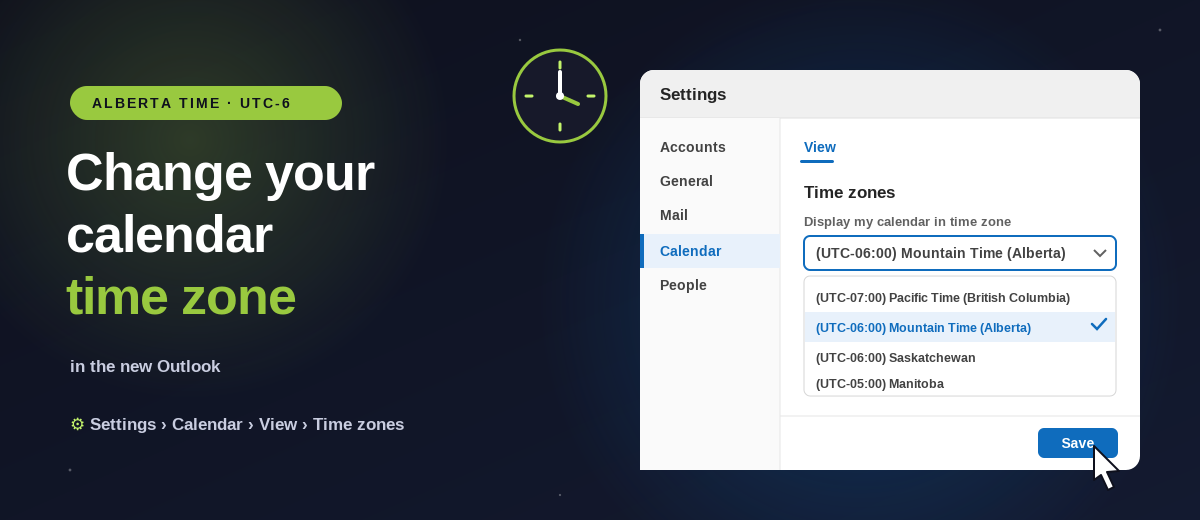
Alberta is now on UTC-6 all year. Switch the new Outlook to Mountain Time (Alberta) in six easy steps, then fix meetings that show up an hour off.
November 2, 2026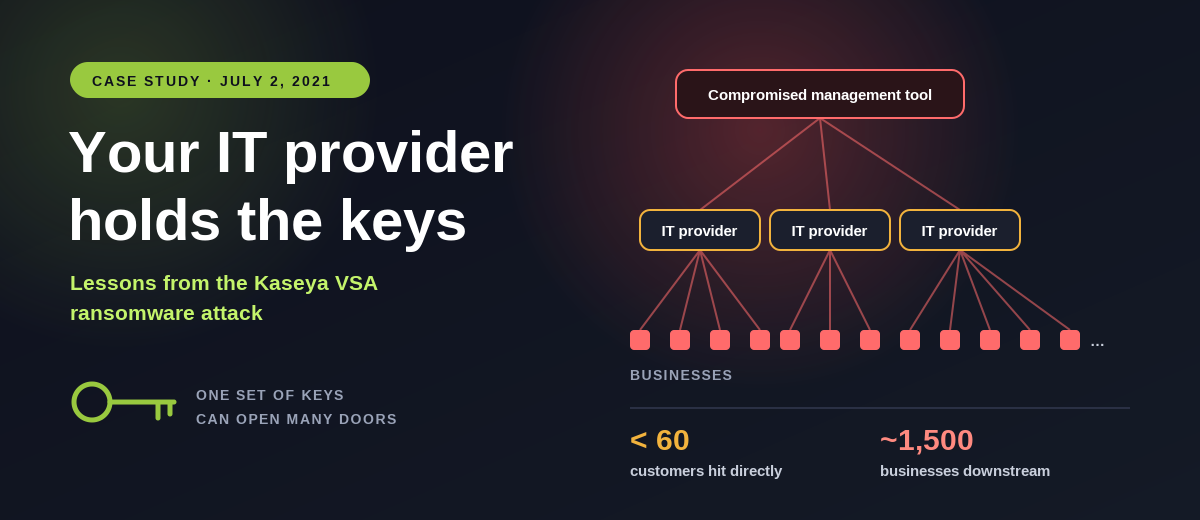
Your IT provider can probably sign in to every computer and server you own, your Microsoft 365, your firewall and your backups. That's what makes a managed IT provider useful: they can fix things at 2 a.m. without driving to your office.
It also means your provider holds the keys to the castle. If an attacker gets those keys, they don't need to break into your business. They can walk in through the front door your provider already opened, and through the doors of every other business that provider looks after.
Attackers know this. In May 2022, the cyber security agencies of Canada, the U.S., the U.K., Australia and New Zealand issued a joint warning that they expected malicious activity aimed at managed service providers to increase, because breaking into one provider can reach many organizations at once.
The clearest example of how this goes wrong is the attack on Kaseya in July 2021.
Choosing an IT provider is a security decision, not just a service decision. The question isn't only "will they answer the phone?" It's also "how well do they guard the access we're giving them, and the tools they use to reach us?"
Do we know which remote management and remote access tools our IT provider has installed on our computers, and who makes them?
Does every person at our provider need multi-factor authentication to reach our systems?
If our provider's tools were used against us tomorrow, could we restore from a backup the attacker couldn't reach?
Does our contract say how quickly our provider must tell us about a security incident?
Kaseya makes software that IT providers use to look after their clients' computers. One of its products, Kaseya VSA, is a remote monitoring and management tool: a central server that can see, update and run software on every computer it manages. Many providers ran their own VSA server ("on-premises"), and others used Kaseya's cloud version.
On Friday, July 2, 2021, just before the U.S. July 4 long weekend, attackers working with the REvil ransomware gang used flaws in on-premises VSA servers to take them over. They then used VSA itself to push ransomware, disguised as a software update, to the computers those servers managed.
Kaseya told customers to shut down their on-premises VSA servers immediately and took its cloud service offline as a precaution. It later said fewer than 60 of its customers, all running on-premises VSA, were directly compromised. Because many of those customers were IT providers, it estimated the attack reached fewer than 1,500 downstream businesses.
The effects reached well beyond IT. In Sweden, the Coop grocery chain closed most of its roughly 800 stores for days because its cash registers were run by a provider whose systems were hit through Kaseya VSA. Coop wasn't a Kaseya customer. The provider that ran its tills was.
REvil demanded US$70 million for a key to unlock every victim. On July 22, Kaseya said it had obtained a universal decryptor from a "trusted third party". Asked whether a ransom was paid, Kaseya told reporters it couldn't confirm or deny that.
This is the part every business owner should think about.
The attack wasn't a bolt from the blue. Volunteer researchers at the Dutch Institute for Vulnerability Disclosure (DIVD) had found security flaws in VSA and reported the first of them to Kaseya on April 6, 2021. Kaseya fixed some of them in April, May and June, but on July 2, three of the seven flaws DIVD reported were still open on on-premises servers, including the one the attackers used (CVE-2021-30116, which leaked login credentials). The fix for on-premises VSA arrived on July 11, nine days after the attack.
To be fair to Kaseya, DIVD publicly praised how it handled their report: it said Kaseya stayed in constant contact, asked the right questions and showed "a genuine commitment to do the right thing". Fixing complex software takes time. But the attackers didn't wait, and the businesses at the end of the chain paid the price.
A week after the attack, Bloomberg reported that five former Kaseya employees said they had warned company leaders about serious security problems between 2017 and 2020. One said he sent leaders a 40-page memo about security concerns in early 2019 and was fired about two weeks later. Kaseya declined to comment on the claims, citing personnel matters and the criminal investigation. These are former employees' allegations, as reported, not findings by a court or regulator.
Five former employees later tell Bloomberg they warned Kaseya leaders about security problems. Kaseya declines to comment.
DIVD reports the first of seven VSA vulnerabilities to Kaseya. Fixes for some follow in April, May and June.
REvil affiliates exploit unpatched on-premises VSA servers and push ransomware to the computers they manage. Kaseya tells customers to shut VSA down.
Coop Sweden closes most of its stores until its systems are restored.
Kaseya releases the on-premises fix (VSA 9.5.7a) and starts bringing its cloud service back online.
Kaseya obtains a universal decryptor from an unnamed third party.
A U.S. court sentences the REvil affiliate behind the attack to 13 years and 7 months in prison.
In early 2019, attackers used a flaw in an old plugin that connected Kaseya VSA to ConnectWise's ticketing software to push GandCrab ransomware through IT providers' systems. That plugin was made by ConnectWise, not Kaseya, and a fix had been available since 2017. Huntress, a security firm, said it knew of four providers that had all of their clients' computers encrypted in one go. Kaseya said it had found 126 companies still running the old plugin.
That one is a lesson about IT providers, not software makers: the tools that manage your computers are only as safe as the provider who keeps them up to date.
Be wary of any tool that sits on every computer you own, and expect your IT provider to have looked hard at the company behind it. Kaseya's 2021 record is part of that picture, and it's reasonable to ask a provider who uses Kaseya products how they've weighed it and what they do to protect themselves.
The rest of the picture: Kaseya says it has changed a lot since 2021. It moved its chief information security officer role to the executive level, hired a former FBI agent to lead it, and its trust centre says many of its products have been through SOC 2 Type II audits. Those are Kaseya's own statements. We'd encourage you, or your provider, to ask for the reports rather than take anyone's word for it, including ours.
A note on industry rankings: analyst reports like Gartner's Magic Quadrant compare vendors on things like product vision and ability to execute. They're not security audits, and a good placement doesn't tell you how a vendor handles a reported flaw. For security, the more useful evidence is an independent audit report (such as SOC 2 Type II), the vendor's public record on past incidents, and how quickly it has fixed reported vulnerabilities.
These come from the joint advisory on managed service providers from Canada's Cyber Centre and its partners, and from the Cyber Centre's guidance for organizations that buy managed services. Any good provider should be glad to answer them.
The joint advisory is direct about that last point: customers should make sure their contracts require their provider to put these protections in place.
If your provider is breached and your clients' or employees' personal information is exposed, Alberta's Personal Information Protection Act (PIPA) doesn't let you point at the provider. Under PIPA, when an organization engages a service provider, it is responsible for that provider's compliance with the Act for those services.
And if a breach creates a real risk of significant harm to anyone, you must notify Alberta's Information and Privacy Commissioner without unreasonable delay. You can't do that if your provider takes two weeks to tell you. That's one more reason to get notification timelines into your contract.
We hold the same kind of keys for our partner organizations, and we think you should ask us exactly the questions above. If you'd like a second opinion on how your current provider protects the access it has to your business, or on your backups and incident plan, talk to us. You can also read about our cybersecurity services, backup and recovery, and why antivirus alone is no longer enough.
Alberta is now on UTC-6 all year. Switch the new Outlook to Mountain Time (Alberta) in six easy steps, then fix meetings that show up an hour off.
November 2, 2026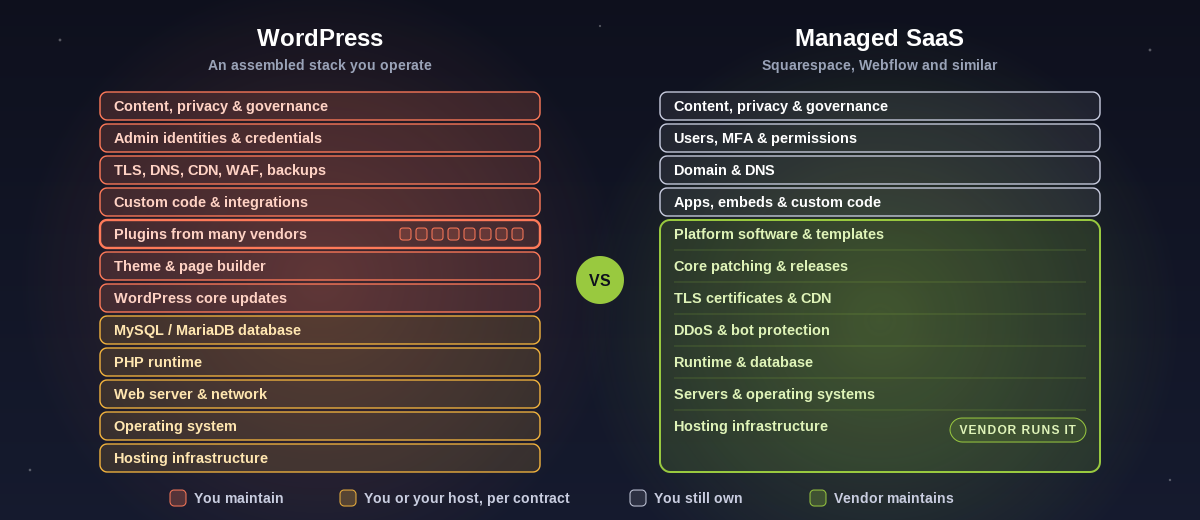
Squarespace, Webflow or WordPress? Why a managed platform should usually be the default, what plugins really cost you, and when WordPress is still worth it.
October 19, 2026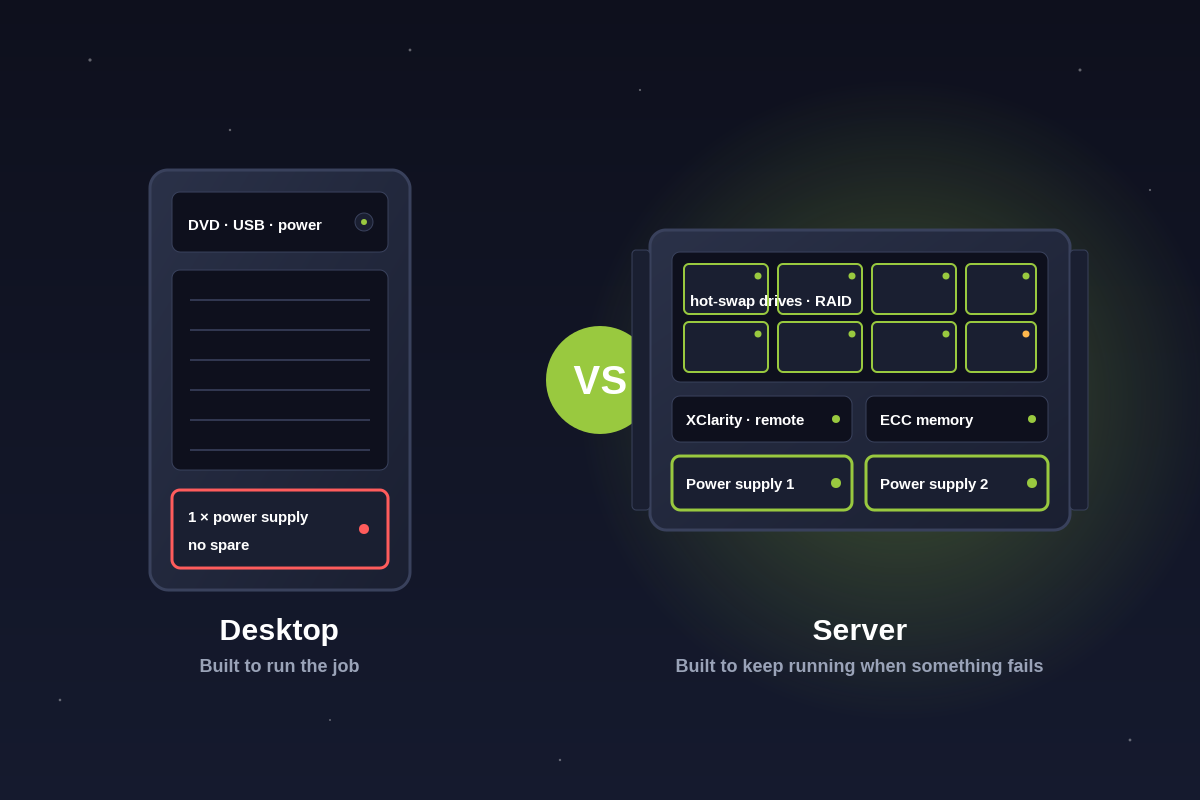
Can a desktop be your server? It can, but it shouldn't always be. See why Lenovo ThinkSystem servers win on reliability, redundancy, remote management and downtime.
October 14, 2026